
UnderstandingYour Pelvic Floor: How MAPLe Is Changing Pelvic Floor Assessment
Bladder leakage when you sneeze, laugh or exercise.
A feeling of heaviness or pressure in your pelvis.
Changes to your core after having a baby.
Or perhaps finding yourself thinking twice about running, jumping or certain activities because you’re not quite sure you can trust your bladder.
For many women, pelvic floor symptoms gradually become something they learn to live with.
You may tell yourself, “It’s just what happens after having children.”
Or perhaps, “It’s part of getting older.”
But while pelvic floor problems are common, that doesn’t necessarily mean you simply have to accept them.
At The Loft Clinic in Queen’s Park, London, we offer pelvic floor assessment and rehabilitation using the MAPLe® system, alongside osteopathic care and a wider whole-body approach to women’s health.

Pelvic Floor Problems Aren’t Always About Weakness
When we think about pelvic floor dysfunction, it can be easy to assume that the muscles are weak and therefore need strengthening.
But this isn’t always the case.
The pelvic floor is a complex group of muscles that supports the bladder, bowel and reproductive organs. It also plays an important role in core stability, posture, sexual function, breathing and the way pressure is managed throughout the body.
Sometimes pelvic floor symptoms are related to weakness. In other cases, certain muscles may be overactive or tense, or the muscles may not be coordinating effectively.
This is why simply doing more pelvic floor exercises isn’t necessarily the answer for everyone.
A detailed pelvic floor assessment can help us understand how your muscles are functioning so that your rehabilitation can be tailored accordingly.
What Is a MAPLe Pelvic Floor Assessment?
MAPLe stands for Multiple Array Probe Leiden and is an advanced pelvic floor assessment and biofeedback system.
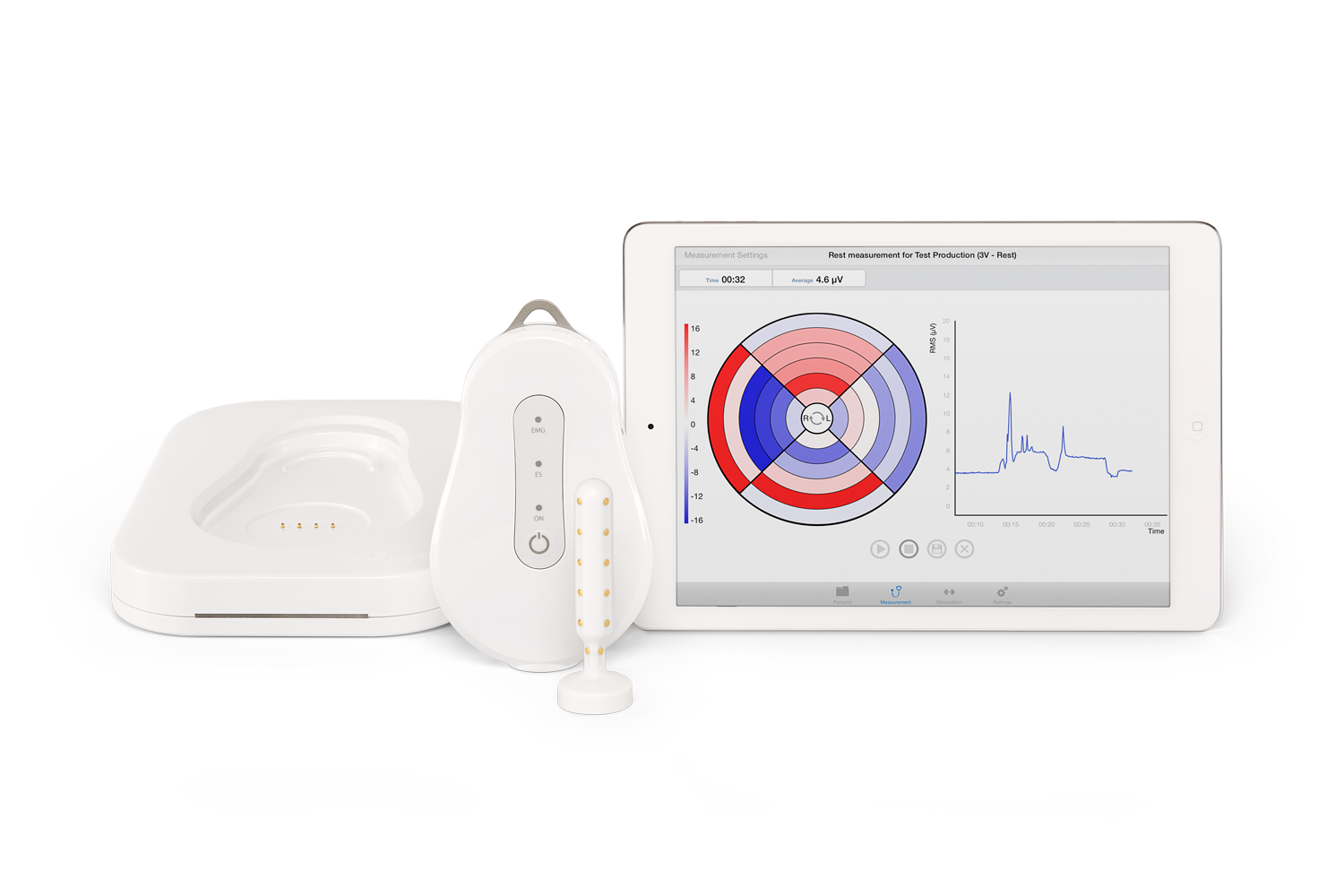
The MAPLe System
It uses a specially designed internal probe containing multiple sensors to provide detailed information about pelvic floor muscle activity, including:
Muscle strength
Endurance
Coordination
Muscle symmetry
Areas of overactivity or tension
Your ability to relax the pelvic floor
MAPLe also provides real-time biofeedback, allowing you to see information about your pelvic floor activity on screen.
This can be particularly helpful if you’ve previously struggled to identify whether you’re engaging your pelvic floor correctly. Rather than guessing what your pelvic floor is doing, MAPLe helps us build a clearer picture that can be used to guide a more personalised pelvic floor rehabilitation programme.
When Might Pelvic Floor Treatment Be Helpful?
Pelvic floor problems can develop at many different stages of life, including during postnatal recovery following pregnancy and childbirth, around menopause, or simply gradually over time.
You may benefit from seeking pelvic floor support if you’re experiencing:
Urinary leakage or stress incontinence
Urgency or frequent urination
Pelvic heaviness or pressure
Symptoms of pelvic organ prolapse
Pelvic pain
Pain or discomfort during intimacy
Constipation or difficulty with bowel control
Ongoing core weakness following pregnancy
Difficulty identifying or engaging your pelvic floor muscles
Symptoms that haven’t improved despite trying pelvic floor exercises yourself
Some women live with these symptoms for months or even years before seeking support. You don’t need to wait until they’re significantly affecting your everyday life before having a conversation about them.
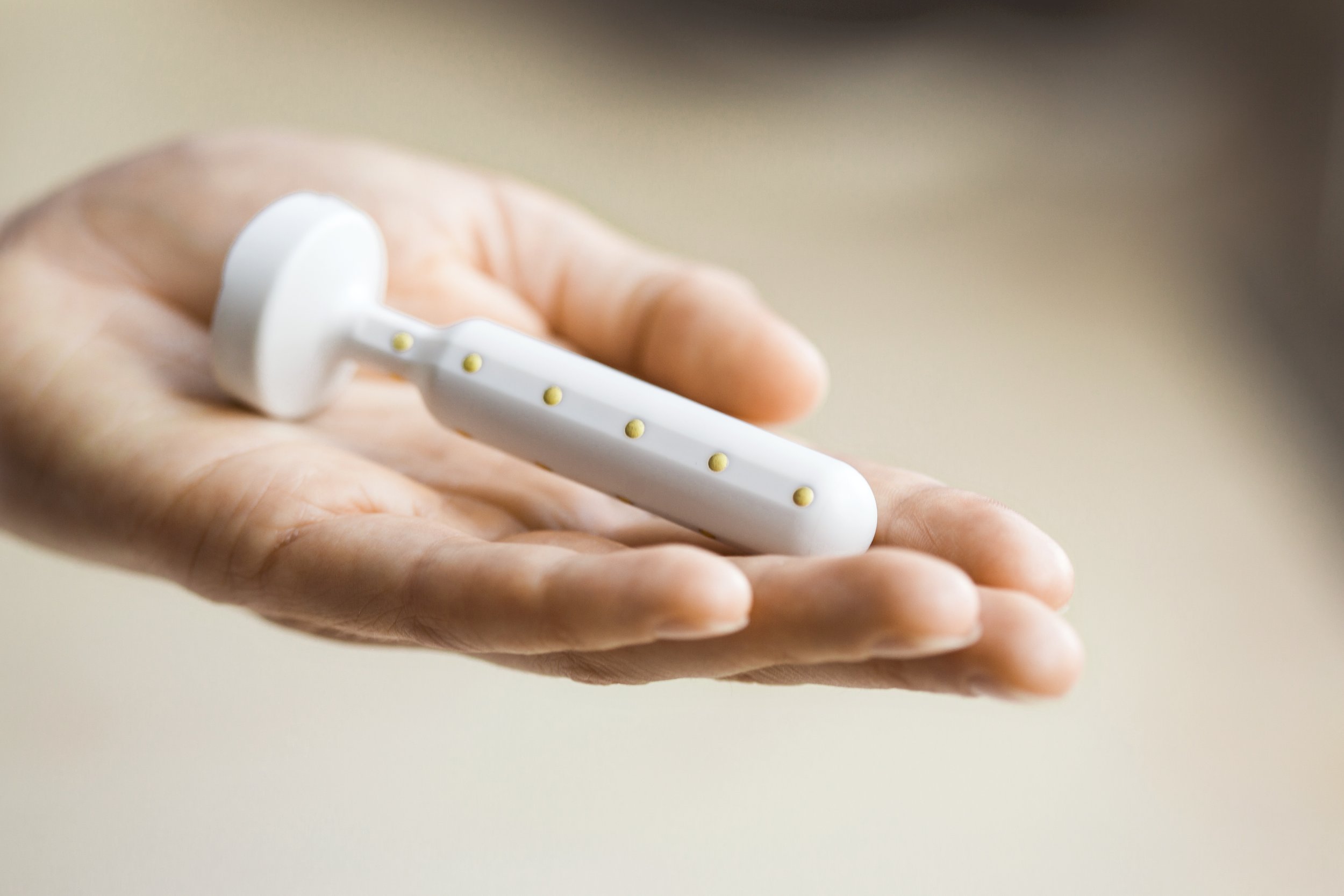
The MAPLe Probe
Pelvic Floor Rehabilitation: Looking at the Bigger Picture
At The Loft Clinic, pelvic floor health isn’t considered in isolation.
Your posture, breathing patterns, abdominal function, scar tissue, movement habits, stress and hormonal changes may all play a part in your pelvic health.
Our MAPLe pelvic floor assessments are provided by Antonia Adeniji, an experienced osteopath with additional postgraduate training in Women’s Health.
Depending on your individual needs, care may include pelvic floor rehabilitation alongside osteopathic treatment, breathing and pressure management, movement guidance, core rehabilitation, scar tissue support and lifestyle advice.
As with all treatment at The Loft Clinic, the aim is to understand the bigger picture and create an approach based on your particular needs.
Looking for a Pelvic Floor Assessment in London?
Our bodies naturally change throughout life. But there’s a difference between recognising those changes and assuming that symptoms affecting your comfort, confidence or everyday activities are something you simply have to tolerate.
If you’ve noticed changes in your pelvic floor, the first step doesn’t have to be starting another set of exercises or waiting to see whether things get worse. Sometimes it can simply be finding out what’s actually happening.
If you’re looking for pelvic floor assessment and rehabilitation in London, The Loft Clinic offers MAPLe assessment from our clinic in Queen’s Park.
We offer a free 20-minute Discovery Call before MAPLe treatment, giving you the opportunity to discuss your symptoms, ask questions and find out whether a MAPLe pelvic floor assessment may be appropriate for you.
Because something being common doesn’t necessarily mean it’s something you have to live with.