Why posture changes as we age: understanding the link between alignment and pain
Have you noticed your posture changing as you’re getting older?
You might look in the mirror one day and be surprised that you are looking hunched and that your head is a bit further forward than you remembered.
Posture is often treated as something static: good or bad, straight or slouched. But in reality, posture is dynamic. It changes throughout life in response to habits, environment, injury history, stress and the natural ageing process.
All this sounds inevitable but actually posture is an area where we can very easily make a difference to how we look and feel.
How poor posture causes discomfort, inflammation and loss of mobility
There are common postural issues which apply to nearly all of us to a greater or lesser extent and which are linked to sedentary lifestyles and inflammatory processes.
Generally speaking we sit too much - prolonged sitting causes inactivity, lack of position/movement variety and poor posture.
Poor posture in the modern world is characterised by our heads and shoulders being projected in front of our chests (sternums/breast bones). In other words we tend to project our chins forward (craning our necks) and hunch our shoulders up and forward. This causes a few problems. Every centimeter further forward we carry our heads, increases the load that our upper back has to bear, putting extra strain on the joints in the thoracic and neck vertebrae. The natural curve in the neck (lordosis) is exaggerated in this position, compressing structures.
Occasional slouching or rounding your posture is completely normal, and doesn’t tend to create any long-term issues. The body is designed for movement and variation, not for holding a single “perfect” position all day.
The challenge tends to come when the same postural positions are repeated for long periods, particularly in modern life where screen time is high - hours spent sitting, looking down at devices, or staying in one fixed position can gradually reinforce certain patterns without us noticing.
Posture rarely shifts in an obvious, dramatic way - it changes subtly over time. If we are not actively noticing or working with our posture and movement, it’s very easy for small changes to accumulate in the background (often, people only become aware of it when discomfort or stiffness begins to show up).
Inflammation is also part of this picture - mechanical load (the amount of physical stress placed on a specific muscle, tendon, or joint during movement.), stress, inactivity, and recovery all interact, meaning the body’s response is shaped by multiple inputs rather than one clear cause. This is where the idea of marginal gains (small, consistent changes can create meaningful shifts over time) becomes useful - you don’t need to completely overhaul your posture or movement habits to see improvement. Often, relatively small adjustments repeated regularly can make a noticeable difference in how the body feels and functions.
Even something as simple as how you move and position yourself during exercise, particularly in strength training or weight-based work, can influence longer-term postural patterns. The body responds strongly to load, so how you use it under resistance matters just as much as how you sit or stand during the day.
The link between alignment and pain
Posture itself is rarely the direct cause of pain, but it can influence how load is distributed through the body.
When alignment shifts, certain areas may experience increased demand. Muscles may work harder to stabilise positions they weren’t originally designed to hold for long periods. Over time, this can contribute to fatigue, tension, or discomfort.
It’s important to understand that pain is rarely the result of a single factor. Instead, it tends to be influenced by a combination of physical load, movement habits, stress levels, sleep, and overall capacity of the body to adapt.
This is why two people can have similar postural patterns but experience very different levels of discomfort.
Why “perfect posture” isn’t the goal
There’s a common belief that there is an ideal posture… one ‘correct’ way the body should be held at all times. But actually - the human body is designed for movement, not stillness, so staying in any one position for too long, even what is considered “good posture,” can create stiffness and discomfort.
What matters more is variation, movement, and the body’s ability to shift between positions comfortably.
From a chiropractic perspective, the focus is less about forcing a perfect alignment and more about improving how the body moves and adapts. When joints move well and muscles are functioning efficiently, posture often improves naturally as a result.
Supporting posture and reducing discomfort
While ageing is a natural part of life, discomfort and stiffness don’t have to simply be accepted as inevitable.
Supporting posture is often about small, consistent changes rather than dramatic interventions. This might include improving movement variety throughout the day, addressing areas of restriction in the spine or joints, and building awareness of habitual positions that may be contributing to overload.
Chiropractic care can also play a role in helping the body restore more balanced movement patterns. By improving joint mobility and reducing restrictions, it becomes easier for the body to distribute load more evenly.
When combined with simple lifestyle adjustments, this can support a noticeable reduction in tension and an improvement in overall comfort.
A more realistic view of ageing and posture
Rather than seeing posture changes as a sign of deterioration, it can be more helpful to view them as a reflection of how the body has adapted over time.
With the right support, these patterns are not fixed. The body remains adaptable at every stage of life, and small improvements in movement and alignment can have a meaningful impact on how you feel day to day.
The goal isn’t to return to a younger version of yourself, but to support the body you have now so it can move with more ease, resilience, and comfort.
Taking the next step
If you’ve been noticing changes in your posture, or your body has been feeling stiffer, tighter, or simply different lately, it might be time to take a closer look at what’s going on.
If you’re curious about what your posture might be telling you, or you’ve been wondering whether your body is feeling older than you do, we’re here to help.
You can book an enquiry with The Loft Clinic to talk things through and get a clearer picture of what’s happening in your body.
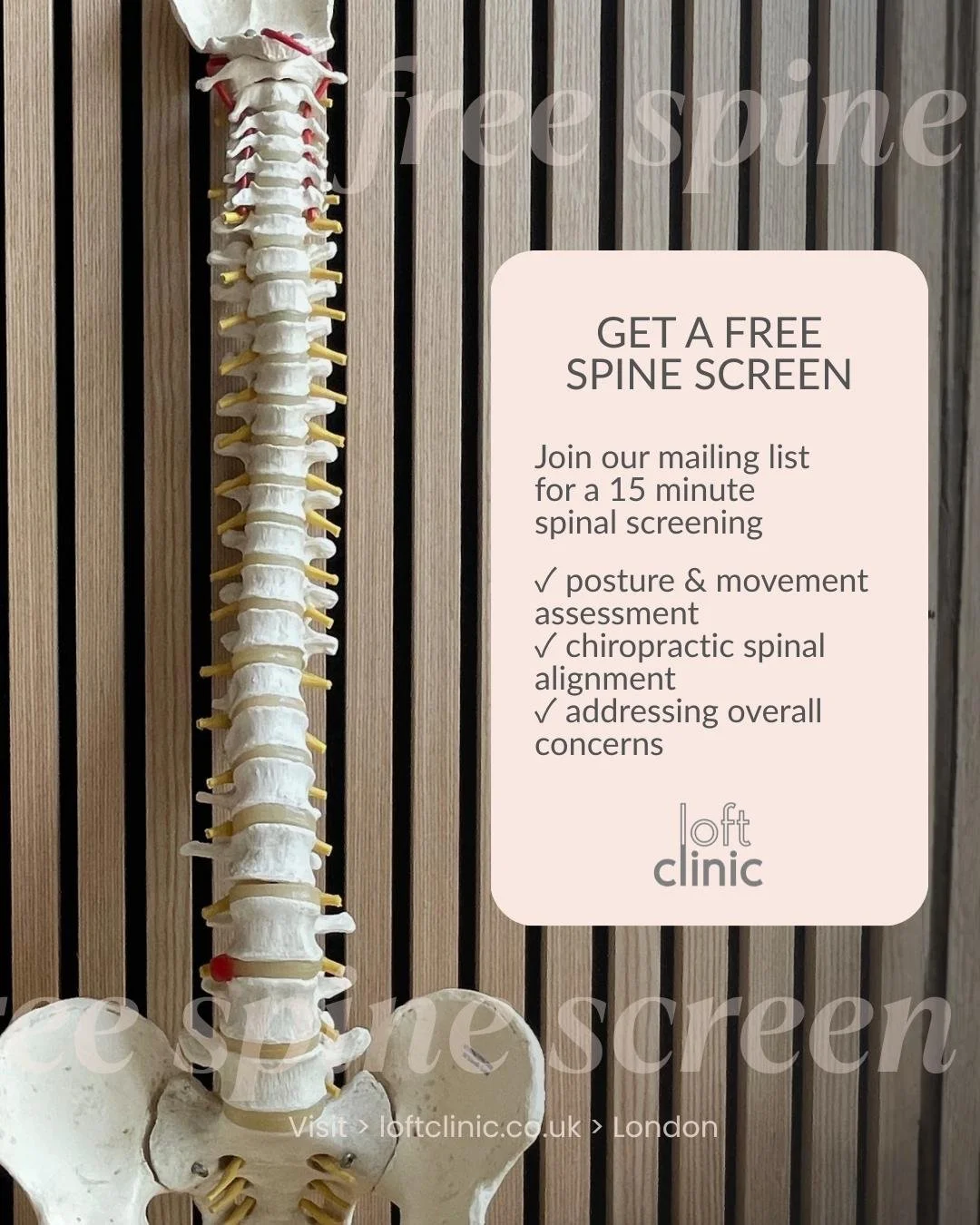
We’re also currently offering a free spine screen - simply use the code SPINE15 when booking.